
The YAMADA HOLDINGS Group recognizes responding to climate change as a crucial issue in achieving a sustainable society. To advance the reduction of CO2 emissions across all business activities, we are actively working to enrich disclosures based on the frameworks of TCFD and TNFD, while also promoting countermeasures through our operations.
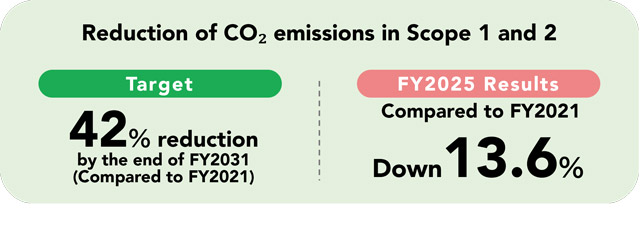
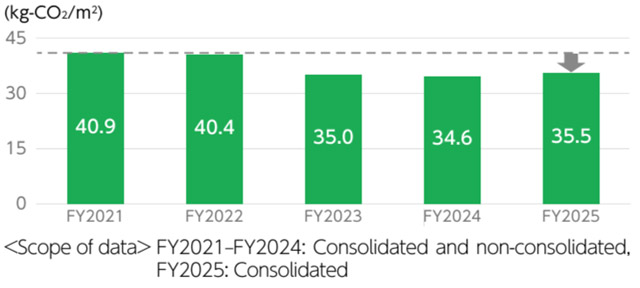
To promote the reduction of CO2 emissions associated with our business activities, our Group is actively working on energy conservation at stores and offices, as well as reducing CO2 emissions at the product use stage by encouraging customers to replace their appliances with energy-efficient models. Additionally, in the fiscal year ended March 2024, we set a CO2 emissions reduction target to decrease Scope 1 and 2 greenhouse gas emissions by 42% by the fiscal year ending March 2031, compared to the fiscal year ended March 2021.
For the YAMADA HOLDINGS Group, the total Scope 1 and 2 emissions in the fiscal year ended March 2025 were reduced by 13.6% compared to the fiscal year ended March 2021.
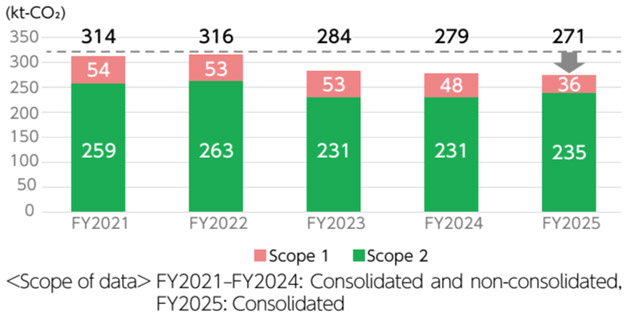
Our Group is continually and proactively working on initiatives to reduce CO2 emissions associated with its business activities. YAMADA DENKI is implementing energy-saving activities, such as switching to LED lighting in its offices and stores, and working to visualize its electricity usage amounts through the use of an app that analyzes electricity consumption in relation to equipment and time by using demand controllers. When developing new stores, we build single-story structures without installing escalators or elevators, improving thermal insulation by reducing the number of windows, and reducing energy use by replacing mercury lamps with LEDs for exterior lighting. Comparing the electricity usage per 3.3 m2 between stores that were built 23 years ago on average and those built 8 years ago on average, the stores with an average age of 8 years showed a reduction in electricity usage of about 15% (as of March 2023). Moreover, since June 2022, we have been working to save power in our YAMADA DENKI stores in response to the government’s request to cut down on electricity.
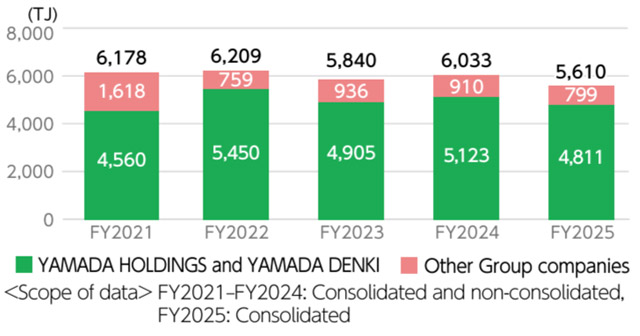
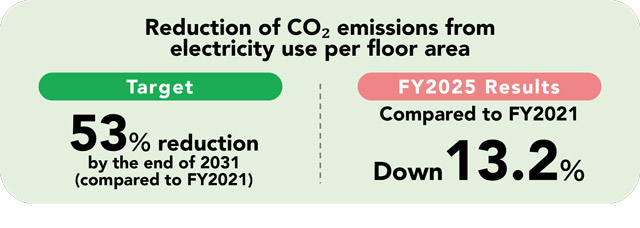
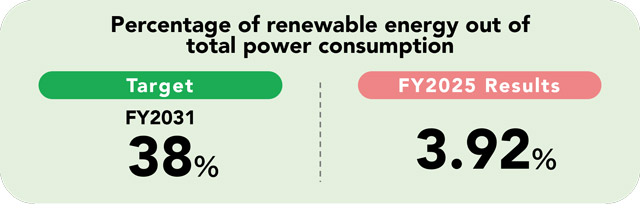
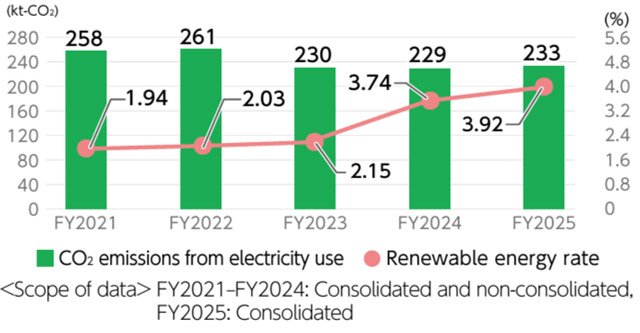
In order to reduce CO2 emissions from electricity use, 3.92% of all electricity comes from renewable energy sources. Since FY2009, YAMADA HOLDINGS has been using green power, and 100% of the power used at the headquarters building in Takasaki City is green power.
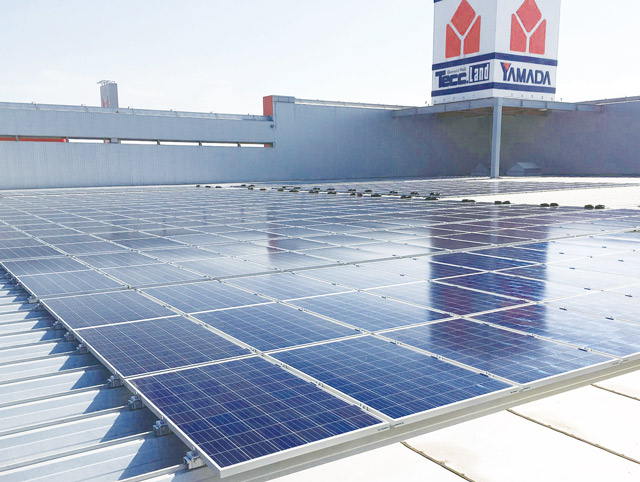
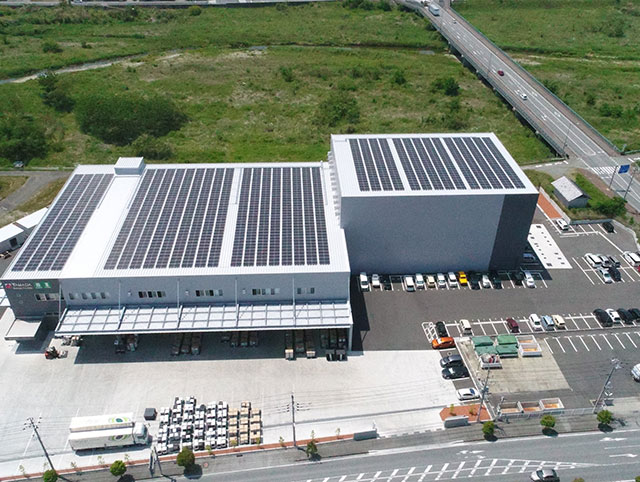
In June 2023, solar panels were installed at the YAMADA East Japan Reuse Center Gunma Plant to provide approximately 55% of the electricity used in plant operations.
In addition, our Solar Panel Project has been installing self-consumption solar panels on the roofs of our stores since December 2024. In FY2026, we plan to invest 1 billion yen and install the panels at 27 stores, and we expect to see a reduction in CO2 emissions of about 3,200t a year. We will be installing the panels at more stores from the following fiscal year.
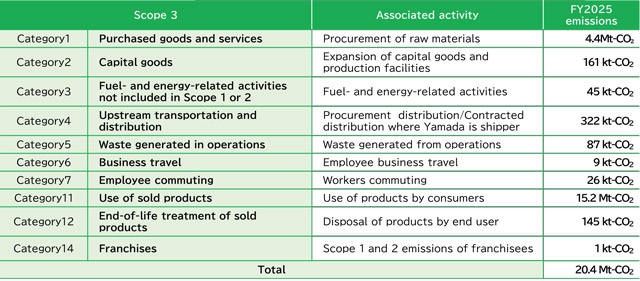
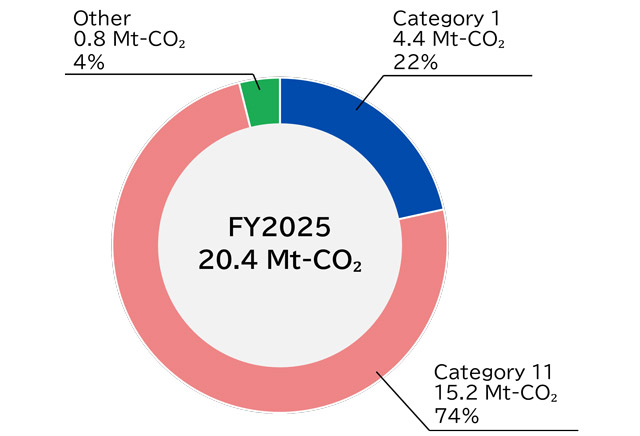
Our Group calculates CO2 emissions for the entire supply chain in order to reduce the environmental impact in all its business activities. Of the Scope 3 emissions for FY2025, use of sold products (Category 11) accounted for the largest share at 74% of the total, followed by purchased goods and services (Category 1) at 22%. We will continue to monitor and reduce CO2 emissions throughout the supply chain.
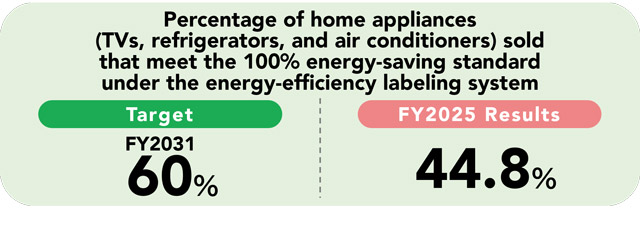
At YAMADA DENKI, employees and Sales Engineers with extensive product knowledge recommend replacing home appliances with energy-efficient ones when serving customers. Additionally, “unified energysaving labels” are posted near the relevant products so customers can easily find energy-saving home appliances.
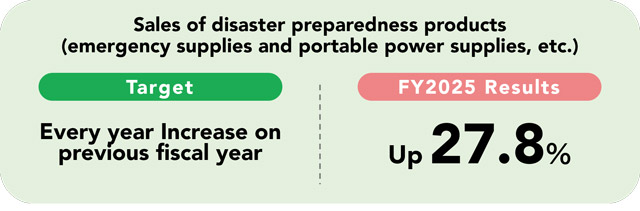
The Group sees the promotion of disaster preparedness products as an opportunity to address climate change while responding to risks such as natural disasters. Sales for FY2025 totaled ¥2,542 million, resulting in a year-on-year increase.
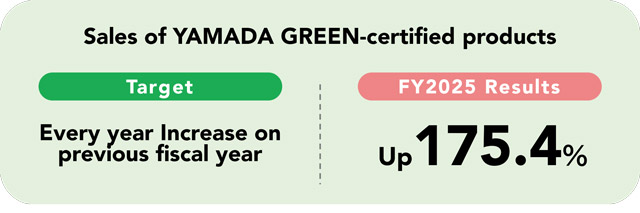
In July 2021, the YAMADA HOLDINGS Group created the YAMADA GREEN logo as a symbol of its commitment to the environment. The five letters of GREEN embody the meanings of Global, Resource, Ecology, Evolution, and Next. It expresses our determination to realize a resource-recycling society and further contribute to the creation of a sustainable society. We have established the YAMADA GREEN Certification System, which allows the display of the logo on products, initiatives, and reused products that meet our own environmental standards (not applicable to energy-saving home appliances). For FY2025, the sales of YAMADA GREEN-certified products amounted to ¥10,587 million, significantly exceeding the previous period.
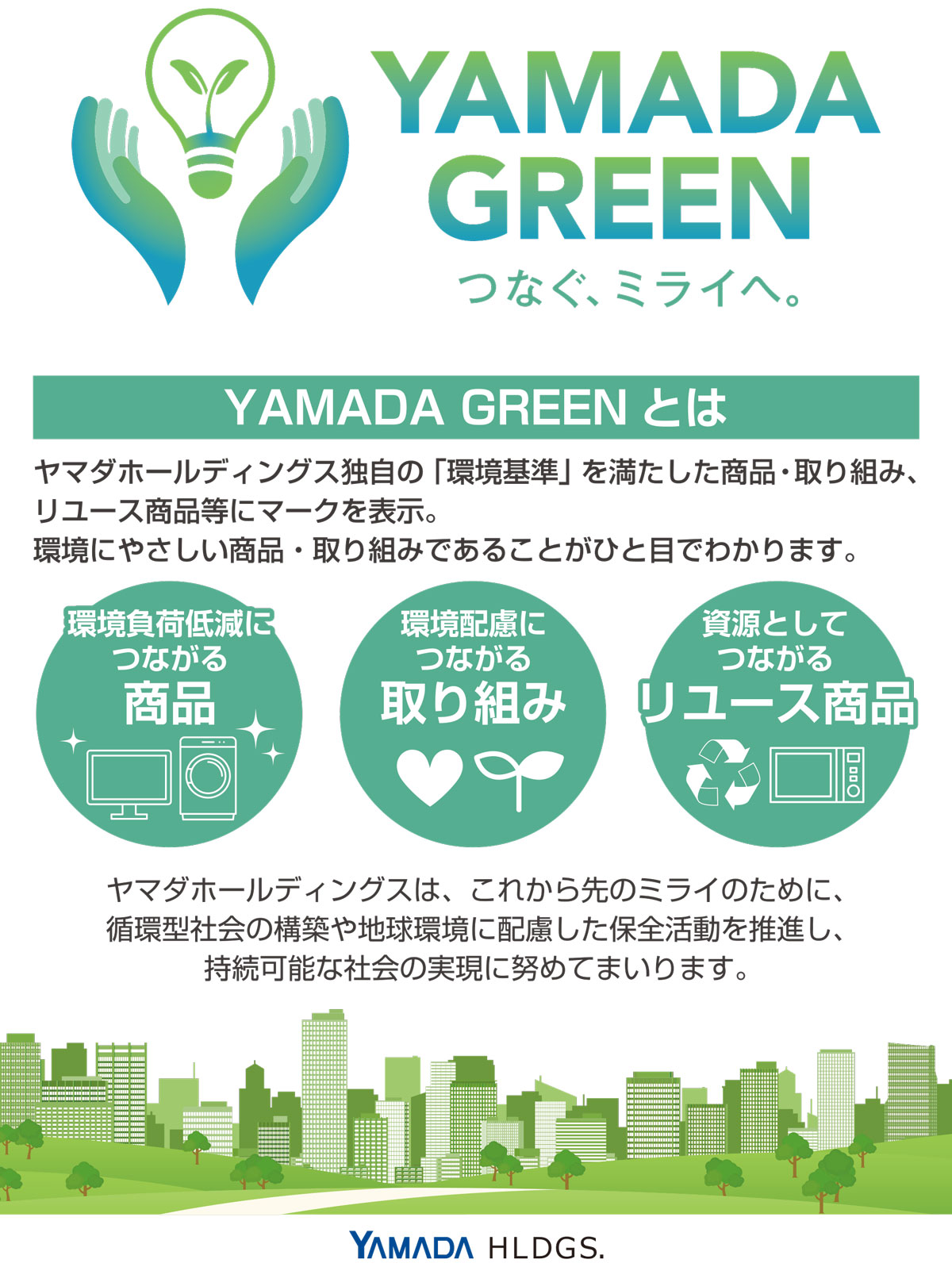
Poster used at Outlet & Reuse Stores
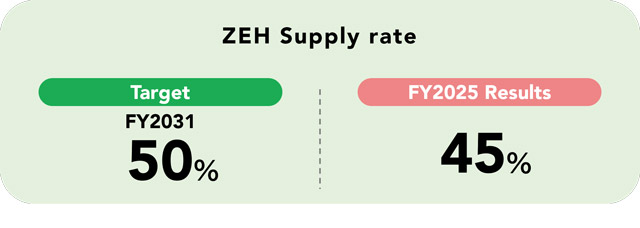
YAMADA HOMES is striving to provide eco-friendly housing and services to promote the widespread adoption of net zero energy houses (ZEH), while also aiming to protect the global environment and realize a comfortable and prosperous life for customers by promoting a lifestyle that does not waste energy.
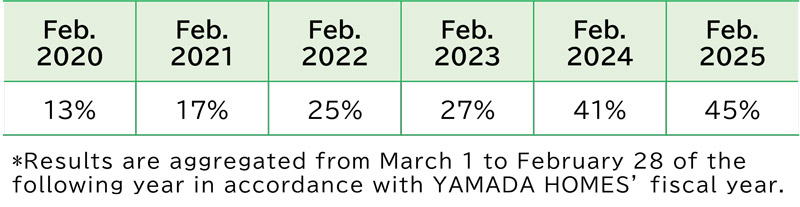
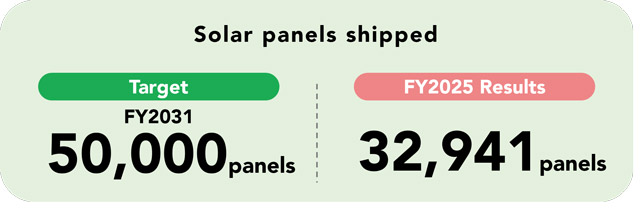
Our Group aims to popularize resilient homes equipped with solar power systems and storage batteries, and actively promotes the installation of solar panels not only in new homes but also in renovation proposals. By visualizing the output of the solar power system and electricity usage with the home energy management system (HEMS) monitor, it is also expected to raise awareness about saving energy without wasting the energy created.
Moving forward, we will further contribute to building a safe and secure society through proposals such as YAMADA HOMES’ YAMADA Smart House and our Energy Revolution Z, which combines the Hinokiya Group’s solar systems, vehicle-to-home equipment, and high-performance storage batteries.
In YAMADA DENKI’s logistics operations, we request subcontractors and partner companies to cooperate with turning off vehicles when stopped. We are maintaining a high implementation rate of over 98% for FY2025. We are also promoting eco-friendly logistics by reducing the number of vehicles used by devising load capacity, shortening vehicle mileage in product delivery by utilizing an efficiency system for inter-store transfers, and testing the effectiveness of five electric vehicles in stores on a trial basis.